Carlo J. Levare
aka John C. Cusimano
Stories rooted in place, memory, and the beautiful mess of being human
John C. Cusimano is a Colorado‑based audit and compliance leader, born in Philadelphia and splitting his time between Erie, CO, Ambler, PA and Toulon, France. He is a continued contributor, blogger and speaker on topics spanning governance, risk, emotional well‑being, and the lived experience of navigating complex systems.Writing as Carlo J. Levare, he creates literary fiction rooted in resilience, emotional honesty, and the quiet pressures of modern institutional life. His work examines how individuals move through cultural, personal, and bureaucratic complexity — with a focus on character, interiority, and emotional truth.In a separate creative lane, John leads a children’s‑book internship program with university art and creative writing departments.John’s books transform difficult subjects into clear, engaging stories while providing emerging illustrators and authors meaningful publishing opportunities and professional credit.This dual commitment is reflected in his publishing imprint, Levare House, whose mission is to elevate both sides of his work: literary fiction that explores emotional truth, and children’s books that make complex systems — technical or emotional — understandable, supportive, and accessible.

E-Books now available on Amazon and Barnes & Noble
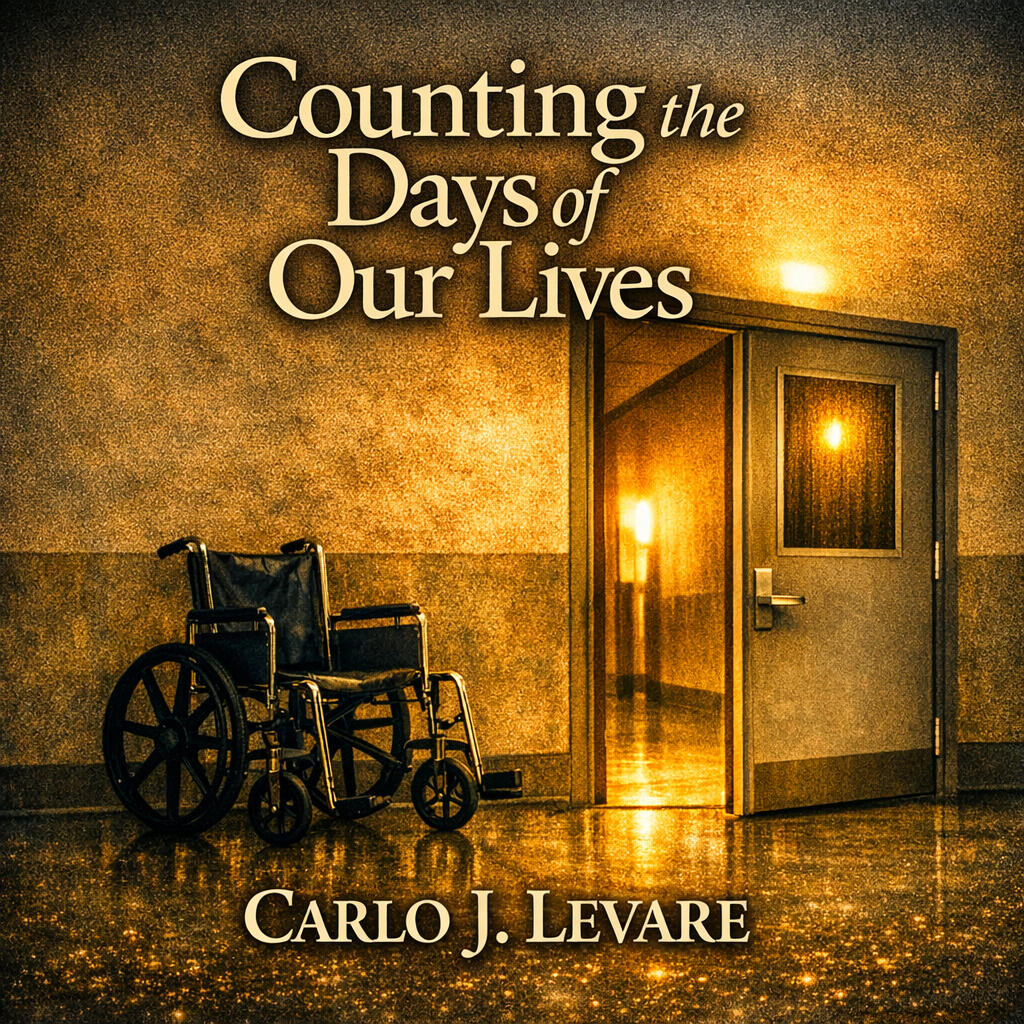
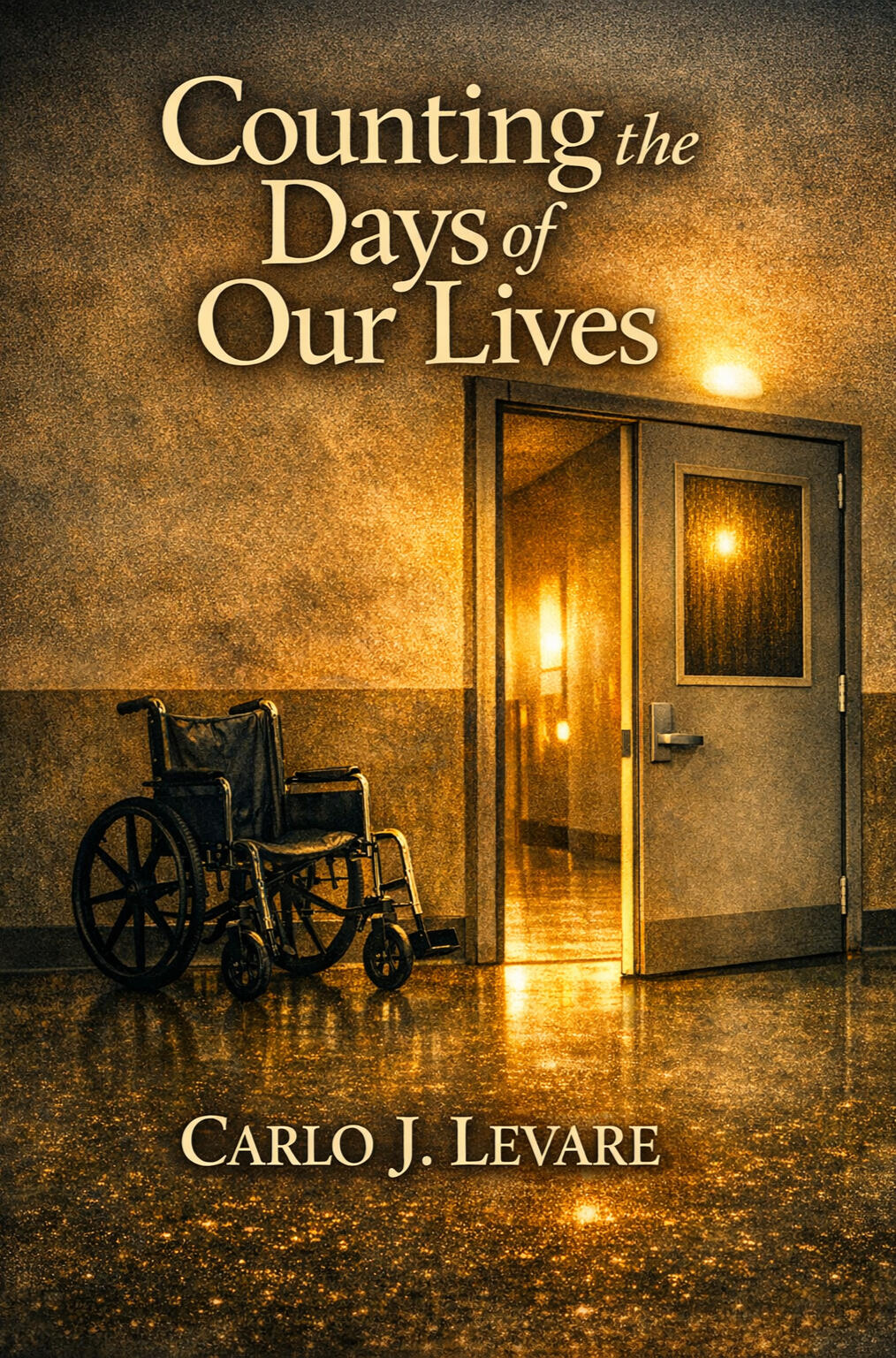
Counting the Days of Our Lives
Dario Esposito wakes up strapped to a gurney in a care facility he definitely didn’t sign up for, and the staff’s cheerful insistence that he “relax” only convinces him he’s been kidnapped by people with clipboards. His only ally is the man in the next bed — a brilliant, unhinged patient who calls himself the Colonel and treats the place like a military occupation. Whether he’s a retired officer or just dangerously bored, Dario can’t tell, but the Colonel knows exactly how this institution grinds people down.Together, the two men navigate the daily absurdities of a system that treats them like misplaced paperwork — trading barbs, plotting small rebellions, and refusing to go quietly. Counting the Days of Our Lives is a darkly funny, sharply observed story about aging, autonomy, and the unlikely friendship that forms when two men realize the only way to stay human is to laugh at the walls closing in.
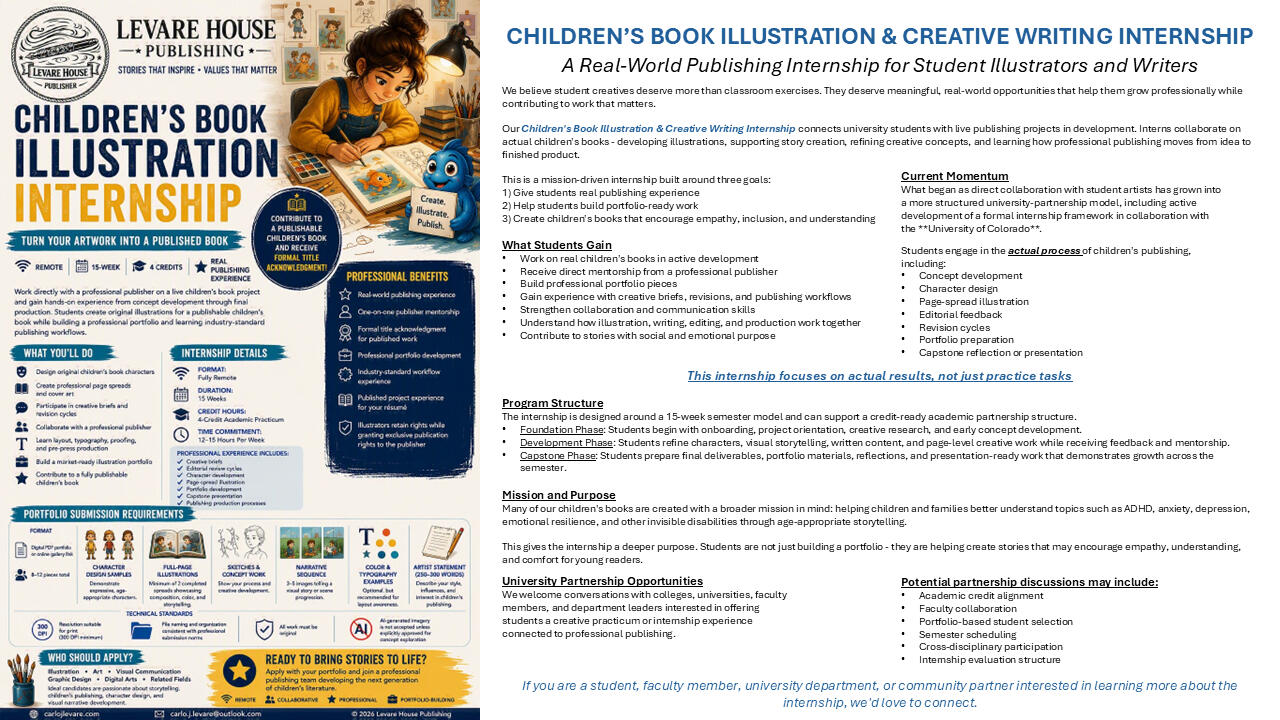
My children’s book initiative brings together local art students, families, and professionals to transform complex IT Audit, governance, and risk concepts into accessible, meaningful stories for young readers. By pairing advanced subject matter with engaging illustrations and age‑appropriate narratives, we create learning experiences that support both early childhood understanding and professional awareness at home and in the workplace.This mission also includes thoughtful representation of invisible disabilities such as ADHD, anxiety, and depression. Through gentle storytelling, we help families and professionals recognize the diverse ways minds process information, build resilience, and engage with the world. Each book serves a unified purpose: demystifying complex topics, fostering empathy and neurodiversity awareness, and providing emerging illustrators with a real‑world pathway to publish their work in a professional format.
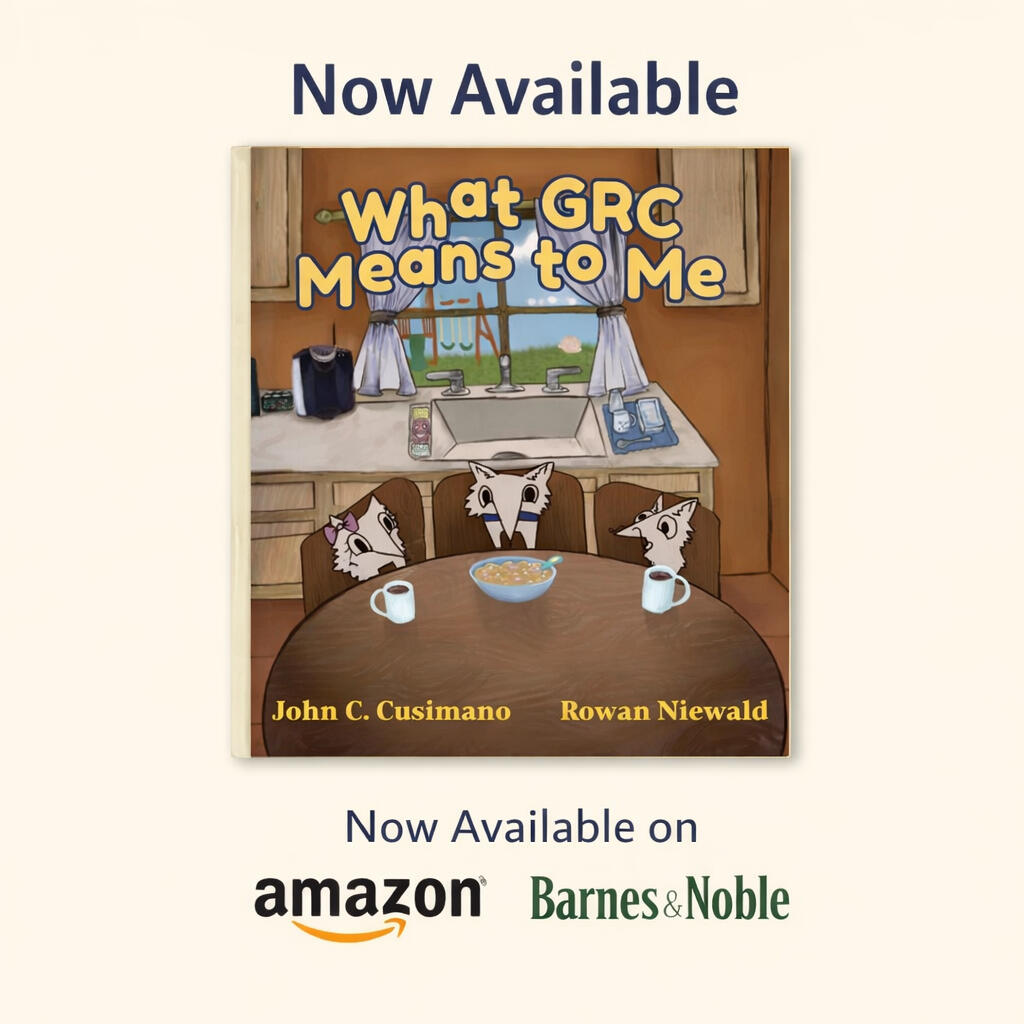
What GRC Means to Me
When a curious kid asks what Mom and Dad do all day in the world of GRC, breakfast suddenly turns into a whirlwind lesson filled with giggles, shoe‑tying mishaps, and big ideas made small enough for little minds to grasp.Through warm family moments and silly examples—like Dad needing a shoe‑tying SOP—children learn the three building blocks of GRC: Governance, Risk, and Compliance. Each concept becomes a simple, relatable part of everyday life, from following steps, to asking “what if?”, to making sure chores get done responsibly.With playful rhyme, gentle humor, and a heartfelt look at how families learn together, What GRC Means to Me turns grown‑up concepts into a joyful, kid‑friendly adventure. It’s the perfect introduction for young readers to understand how the world stays safe, steady, and wonderfully well‑run.
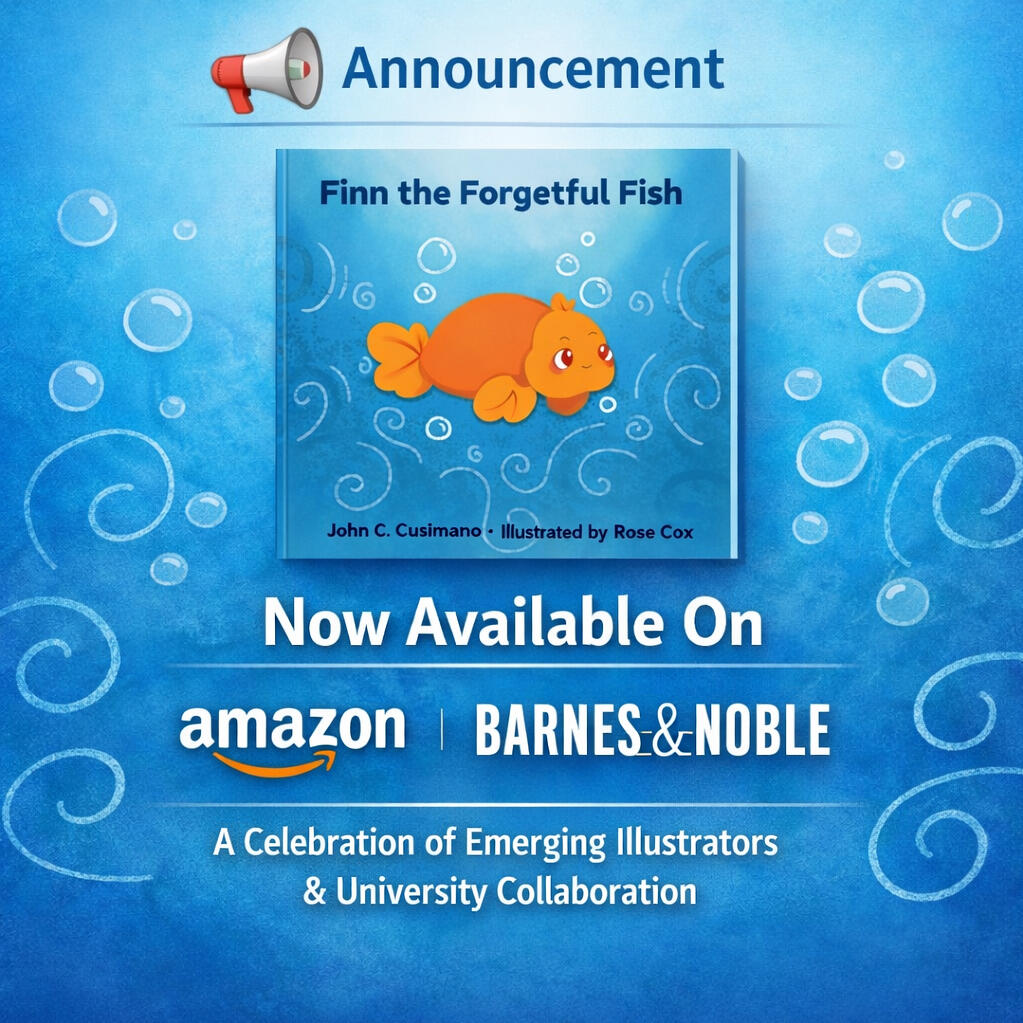
Finn the Forgetful Fish
Finn is a little fish with a big problem — he keeps forgetting how to swim. One moment he’s gliding through shimmering coral reefs, and the next he’s sinking like a pebble, wondering what he was supposed to be doing.Determined to remember what matters most, Finn sets off on a colorful underwater adventure filled with friendly sea creatures, surprising discoveries, and a few splashy mistakes along the way. With each new challenge, Finn learns that even when you forget things, you can always find your way with a little courage, a little help, and a whole lot of heart.A gentle, joyful tale about perseverance, self‑confidence, and the magic of trying again, Finn the Forgetful Fish is a story young readers will want to dive into again and again.
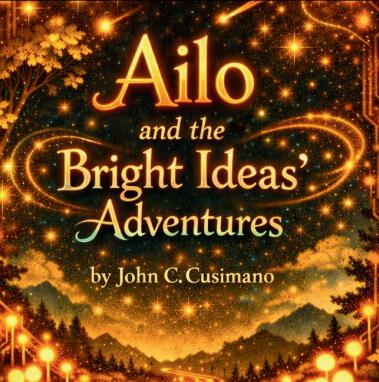
Alio and the Bright Ideas' Adventure
Meet Ailo, a curious little helper who lives in a world of humming circuits and dancing ideas. Ailo loves exploring big questions—especially the ones children ask with bright eyes and boundless imagination.In this gentle adventure, Ailo joins a parent and child as they discover the wonders of nature, from swirling autumn leaves to the tiny creatures that change with the seasons. Along the way, Ailo learns an important truth: humans teach with heart, and stories help everyone—kids, grown‑ups, and even AIs—understand the world a little better.“When humans teach stories best, Ailo learns them right.”Filled with warmth, curiosity, and the magic of shared learning, Ailo and the Bright Ideas’ Adventures celebrates the partnership between people and technology—and the stories that guide us all. Whether you’re reading aloud or exploring together, this tale reminds every reader that wisdom grows brightest when shared.
Mission Statement
Use storytelling to make complex worlds—emotional, professional, and institutional—more human, more accessible, and easier to understand.
John C. Cusimano — who writes literary fiction under the pen name Carlo J. Levare — is a multidisciplinary author whose work bridges introspective fiction, educational storytelling, and community‑centered creative development.Splitting his time between Erie, Colorado, Ambler, Pennsylvania, and Toulon, France, John writes with a mission that threads through every project he undertakes: to distill complexity into human‑centered narratives, to make difficult ideas accessible, and to elevate emerging artistic voices.
Literary Fiction as Carlo J. LevareJohn’s literary fiction is published under the name Carlo J. Levare, a deliberate creative boundary that allows him to explore emotional honesty, vulnerability, and the quiet tensions that shape modern American life. The name itself carries personal meaning: Carlo honors his Italian heritage, while Levare — Latin for “to lift,” “to raise,” “to remove” — reflects his intent to reveal the emotional and structural pressures that often go unseen.As Carlo J. Levare, John writes character‑driven fiction rooted in emotional realism, dark humor, and regional authenticity. His stories draw on cultural memory from his Pennsylvania upbringing and on the lived experience of individuals navigating bureaucratic, high‑pressure systems. Through intimate, reflective prose, he examines resilience, identity, and the subtle forces that shape everyday life — always with an eye toward the human impact of institutional design.This lane of his work is deeply personal, offering a counterbalance to the precision, structure, and analytical rigor of his professional background in IT audit, governance, and organizational ethics.
Children’s Books and Educational StorytellingIn a distinct and separate creative effort, John leads a children’s‑book initiative developed in collaboration with university art and creative writing programs. This project blends education, accessibility, and creative opportunity, producing books that simplify complex professional topics — including IT Audit, governance, organizational ethics, and risk — into playful, approachable narratives for families and classrooms.These books serve a dual educational mission:• Demystifying professional concepts — translating workplace topics into language children can understand, helping parents explain what they do at work, and giving classrooms a gentle entry point into technology, ethics, and decision‑making.• Supporting neurodiverse readers — breaking down ideas related to attention, memory, emotional regulation, and invisible disabilities such as ADHD, anxiety, and depression. Characters model curiosity, resilience, and self‑acceptance, reinforcing that every mind — structured, scattered, sensitive, or analytical — has value.This work reflects John’s commitment to mentorship, accessibility, inclusion, and the belief that complex ideas can be made understandable without losing their depth.
A Platform for Emerging ArtistsA defining feature of John’s children’s‑book initiative is its commitment to student illustrators and authors. Through partnerships with university art and creative writing programs, emerging students gain:• Portfolio‑ready published work
• Professional credit
• Real‑world experience in visual storytelling
• Collaboration with a professional publishing team
• Exposure to the full lifecycle of book productionEach book becomes a shared achievement between writer, illustrator, and publisher strengthening creative pathways for the next generation and opening a traditionally closed publishing industry door.This mentorship‑driven model reflects John’s belief that creative industries thrive when new voices are not only welcomed but actively supported.
A Unified Creative MissionAcross genres, John’s work reflects a cohesive mission: to distill complexity into clear, meaningful narratives; to support neurodiverse readers; to elevate emerging artists; and to make professional and personal worlds easier to understand.His fiction explores the emotional architecture of modern life.His children’s books translate complex ideas into accessible stories that empower all readers.Together, these efforts form a body of work defined by clarity, empathy, and human‑centered design — with a touch of humor where possible along the way.
My Audience
Readers of Dark Humor and Emotional Literary Fiction
For readers who want stories that make them laugh, wince, and feel something real. Those who gravitate toward Backman, Haig, Lawson, Rowley, and Tropper — people who appreciate humor as a coping mechanism and emotional truth without sentimentality.
My literary fiction, written as Carlo J. Levare, speaks to this audience through narratives rooted in resilience, institutional pressure, and emotional honesty.Caregivers, Adult Children of Aging Parents, and Healthcare Workers
A large, emotionally invested community often under‑recognized in contemporary fiction. My work highlights institutional failures, the guilt and grief of caregiving, and the absurdity that emerges when love collides with strained systems.Readers Who Love Protagonist‑Driven Fiction
Themes like late‑life reinvention, dignity, resilience, unexpected friendship, and humor in aging are universal. For many Gen X readers, these realities are approaching quickly — often before they’ve had time to process them. My work speaks directly to that transition.Book Clubs — Especially Intergenerational Ones
My books spark conversations beyond the page. Heartbreak, moral ambiguity, institutional critique, and complex relationship arcs naturally invite debate, empathy, and shared reflection.Mental Health and Recovery Communities
Recovery is more than “getting better.” It’s rebuilding identity, surviving adversity, and maintaining individuality. These communities respond strongly to narratives of resilience that avoid clichés and instead embrace honesty, humor, and humanity.Veterans and Military Family Readers
This community defies simple categorization. Their experiences with service, trauma, aging, and identity deserve nuance and respect. My work aims to portray these complexities with honesty and depth.Institutional Reform & Healthcare Advocacy Circles
Long‑term, my writing serves as a quiet but persistent call to action — encouraging meaningful dialogue about bureaucracy, the people trapped within it, and the ethical consequences of systems that fail to serve their intended purpose.
Where the Children’s Books Fit In
Alongside my literary fiction, I lead a children’s‑book collaboration program through Levare House, partnering with student illustrators, authors and university art and creative writing departments. This work extends my mission into two essential educational lanes:• IT audit & compliance — simplifying governance, risk, and technology concepts into story‑driven lessons young readers (and their parents) can understand.• Invisible disabilities — creating gentle, accessible narratives that help families discuss ADHD, anxiety, depression, and other emotional‑wellness challenges often left unspoken.These books distill complex topics into their core elements — fostering discussion, insight, and awareness — while giving students meaningful publishing opportunities and professional credit.
Genres
Dark Humor
Literary Fiction
Contemporary Fiction
Family & Relationships
Medical Fiction
Psychological Fiction
Protagonist Fiction
Children’s Books
An ARC reader is someone who reads a book before it’s officially published and shares an early review to help build buzz and visibility for the author.An ARC reader receives an Advance Reader Copy, a pre‑publication version of a book sent out to reviewers, bloggers, librarians, influencers, or enthusiastic early readers. Their role is to read the near‑final manuscript and provide honest feedback or public reviews—often on platforms like Goodreads, Amazon, or social media—right around launch time. This early wave of reactions helps authors generate momentum, attract new readers, and refine final details before publication.
ARC Readers for current Levare House books are now closed. If you want to be considered as a future ARC reader, please fill out the form below.